 Image 1 of 6
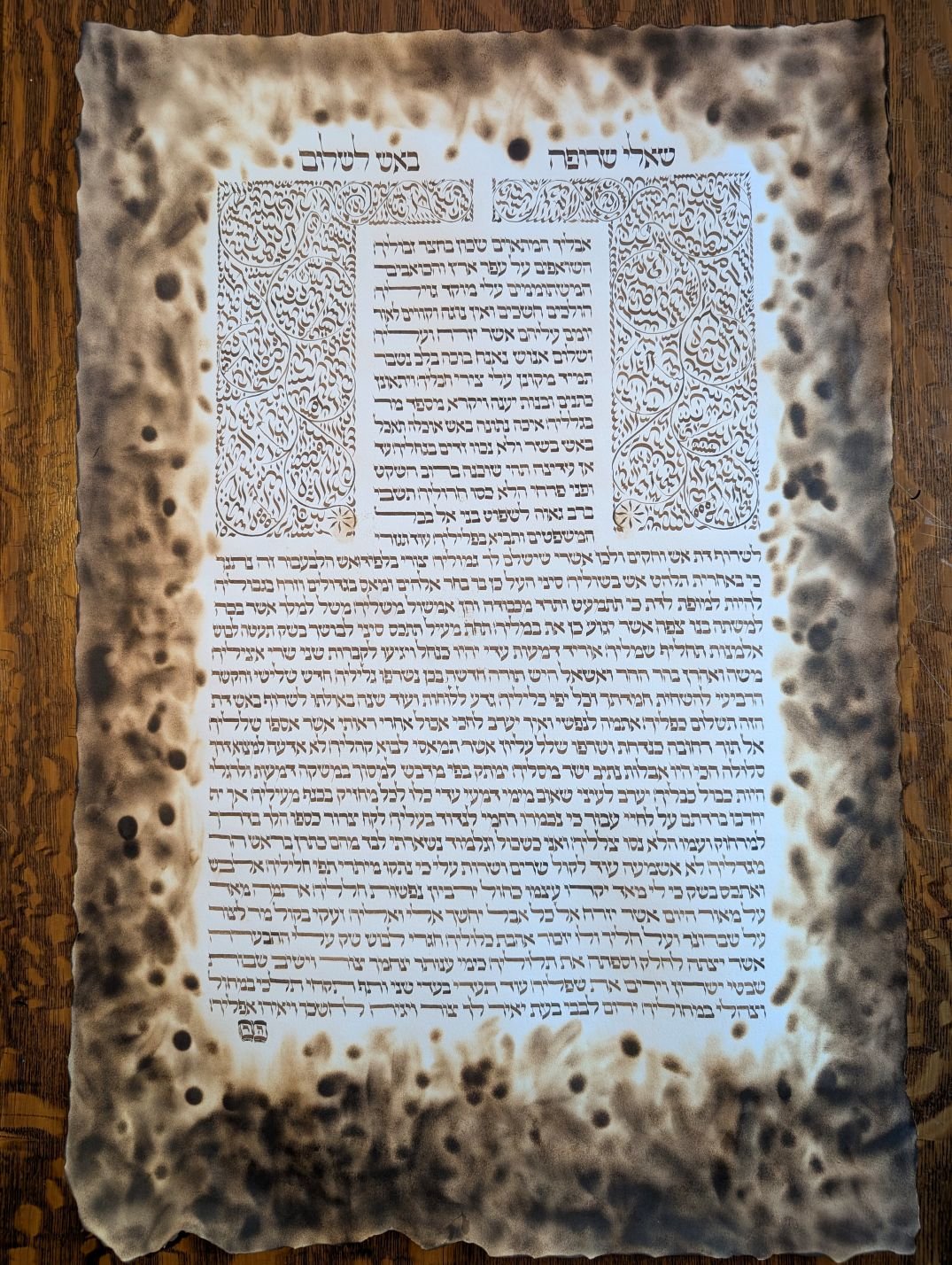 Image 2 of 6
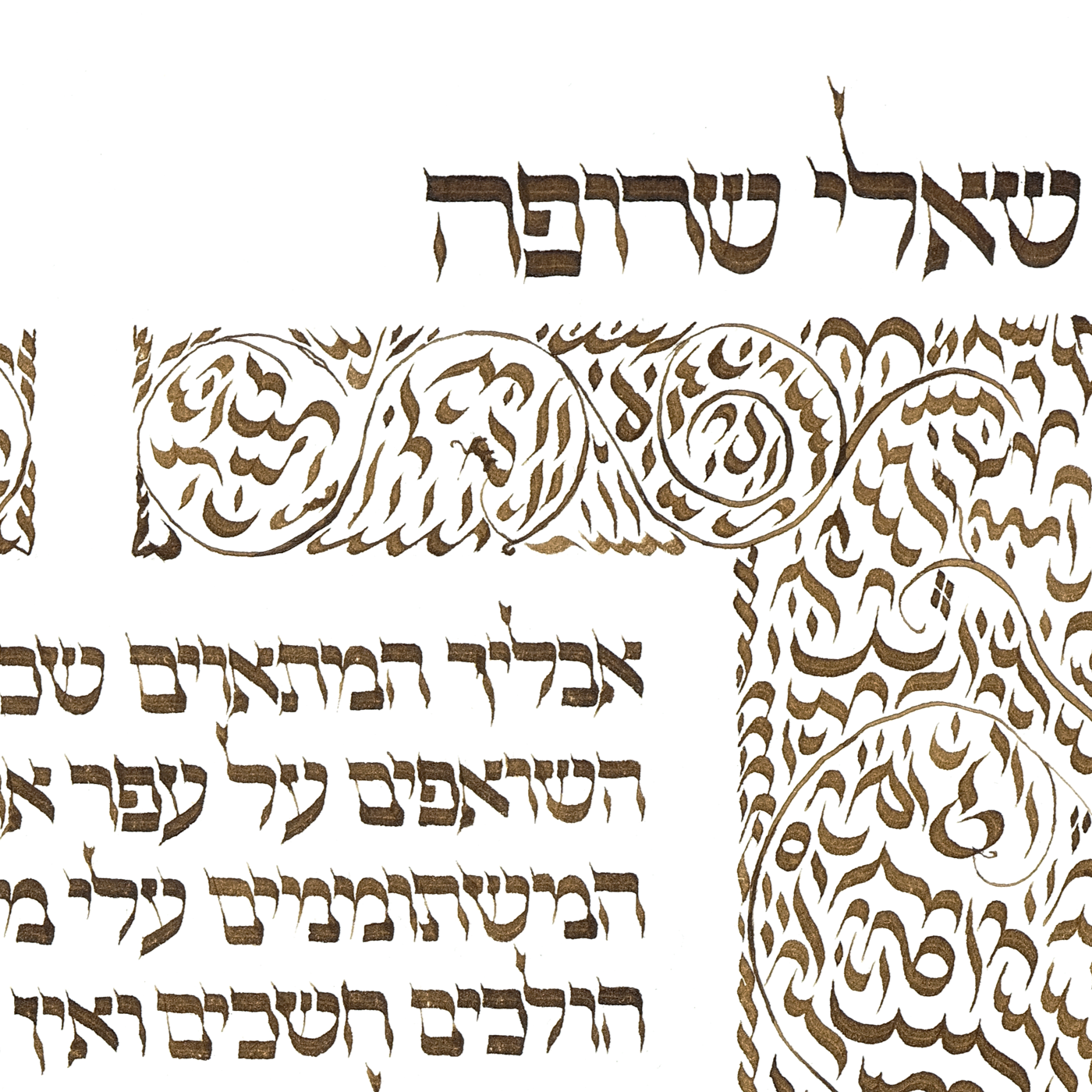 Image 3 of 6
 Image 4 of 6
 Image 5 of 6
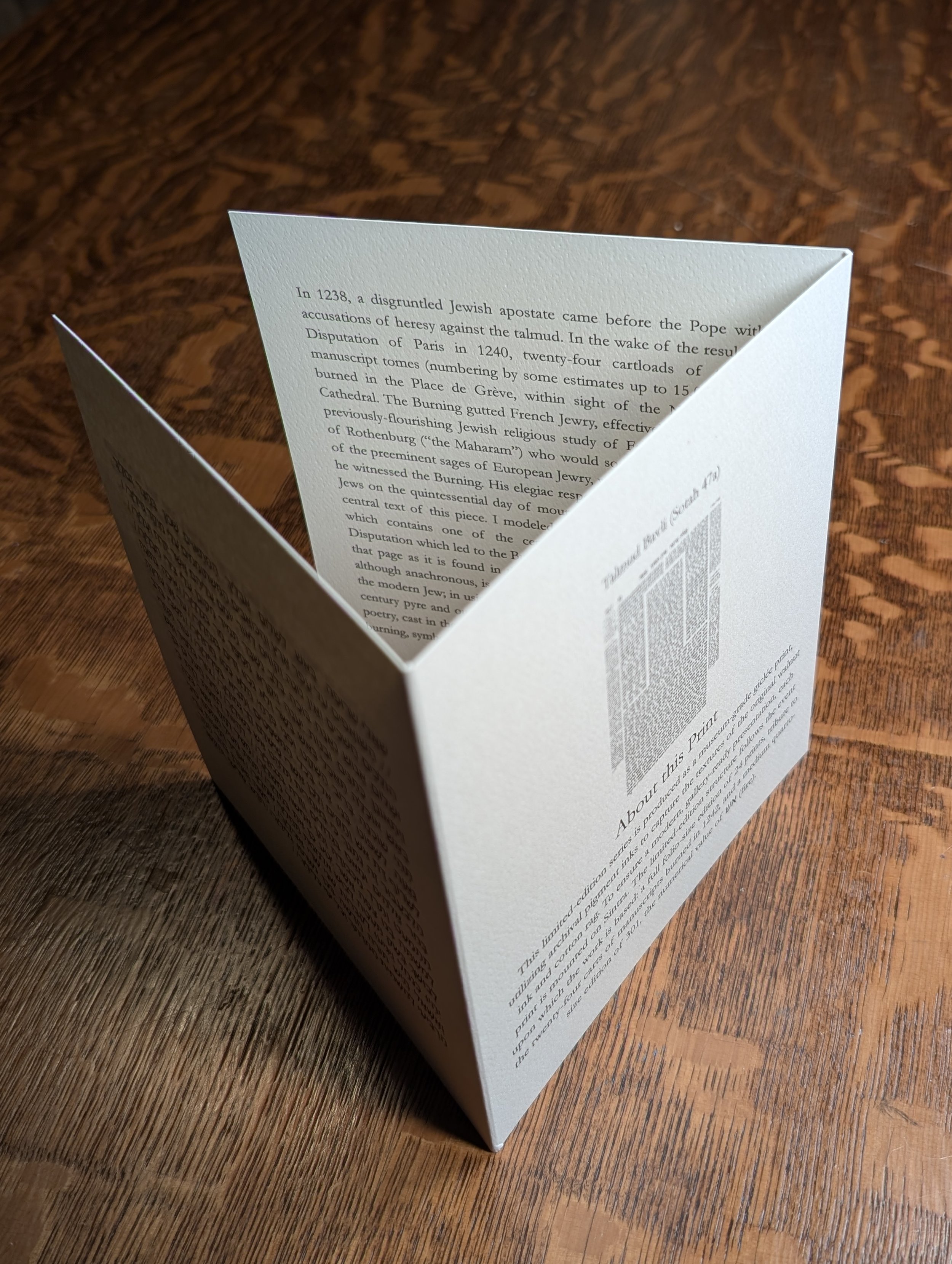 Image 6 of 6
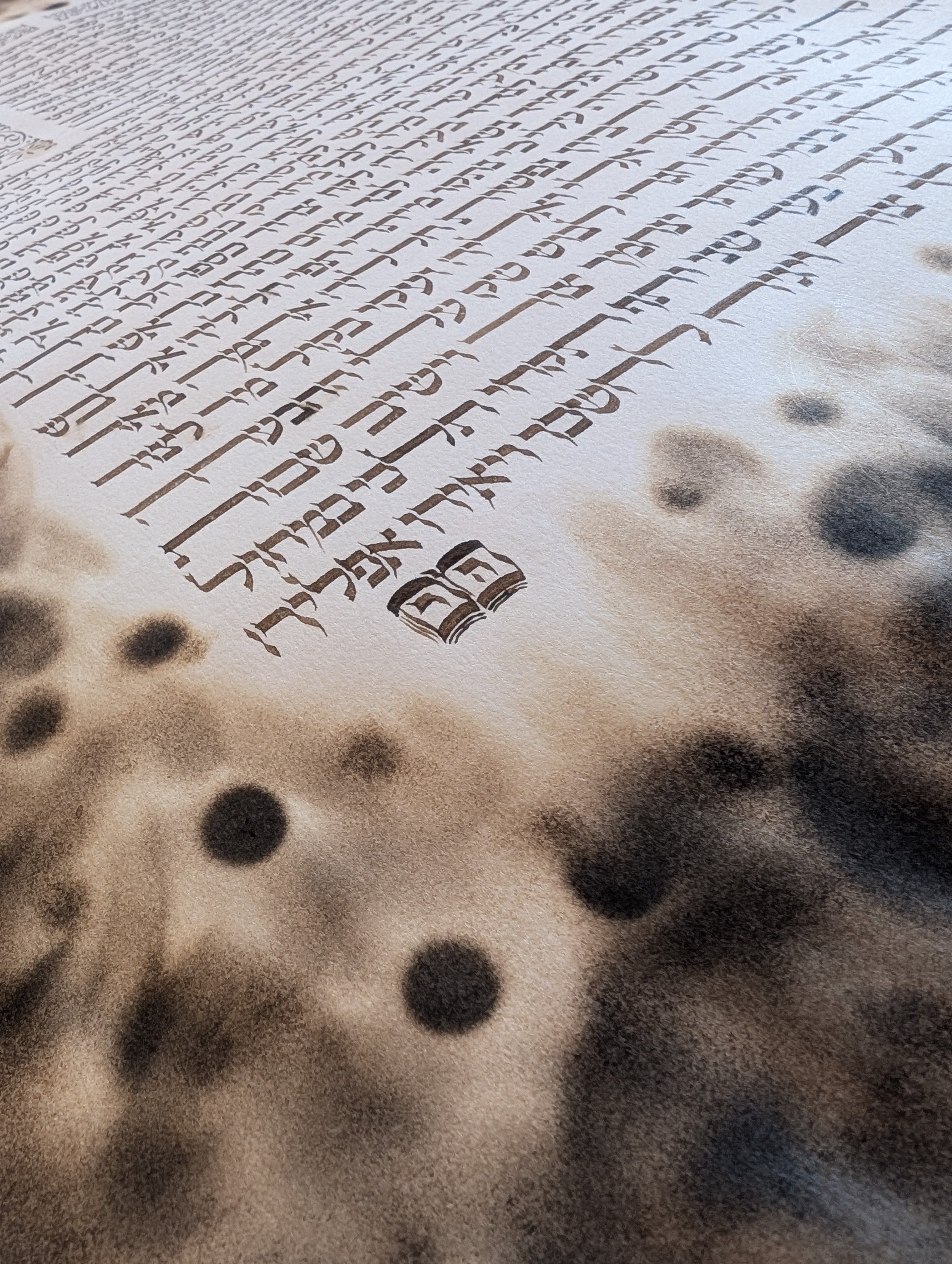
In 1238, a disgruntled Jewish apostate came before the Pope with accusations of heresy against the talmud. In the wake of the resulting Disputation of Paris in 1240, twenty-four cartloads of talmud manuscript tomes (numbering by some estimates up to 15,000 manuscripts) were burned in the Place de Grève, within sight of the Notre Dame Cathedral. The Burning gutted French Jewry, effectively silencing the previously-flourishing Jewish religious study of France. Meir of Rothenburg, who would soon after become one of the preeminent sages of European Jewry, was in his 20s when he witnessed the Burning. His elegiac response, recited to this day by Jews on the quintessential day of mourning, the Ninth of Av, is the central text of this piece. I modeled the form of this poem after Bavli Sotah 47a, one of the central texts of contention in the Disputation. I selected the specific layout of that page as it is found in the Vilna Shas, which, although anachronous, is the definitive architecture of the Talmud to the modern Jew; in using it, I build a visual bridge between the 13th-century pyre and our contemporary memory. The ink of Maharam’s poetry, cast in the form of one of the talmudic pages that led to the burning, symbolically extinguishes those destructive flames.
When the second-century sage Chaninah ben Teradion was executed, bound in a burning Torah scroll, he told his students as he burned that “the parchment burns, but the letters fly into the air.” Unchained from their physical form, the letters return to their heavenly source, untouched by the flames. In keeping with this concept, I have filled the traditional place of the marginal commentaries with ornate scrollwork. This scrollwork does not, however, serve merely as a decorative element. In it are ensnared, as was the ram of the Akeda, the 22 letters of the Hebrew alphabet as they fly heavenward, untouched by the flames.
The scorched perimeter forces the viewer to grapple with the fact that although the ink metaphorically extinguishes the violent flames, and although the soul of the texts remains unharmed, the scar of the Burning remains a physical reality; those texts and the learning that they should have facilitated, the life that they could have maintained in French Jewry, are forever lost.