 Image 1 of 6
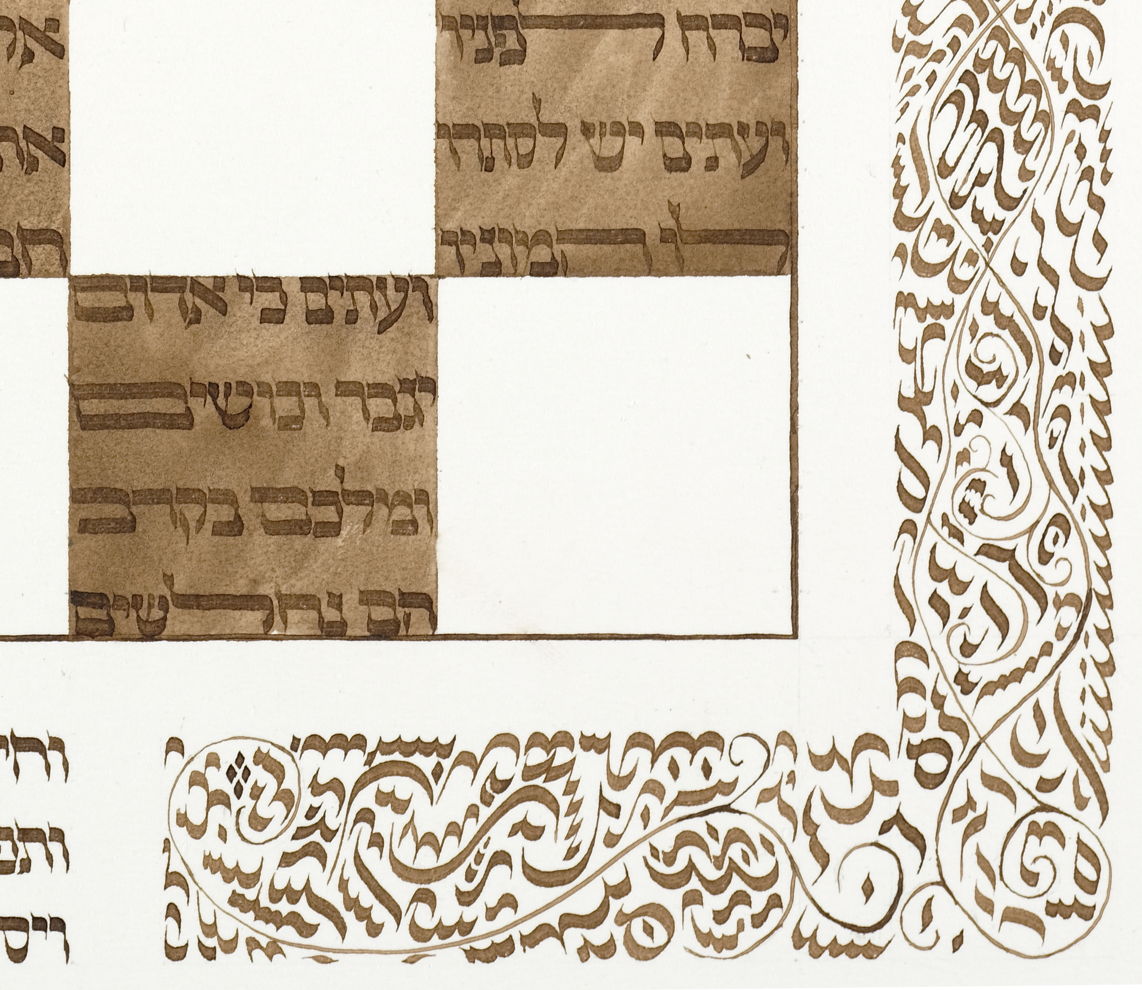 Image 2 of 6
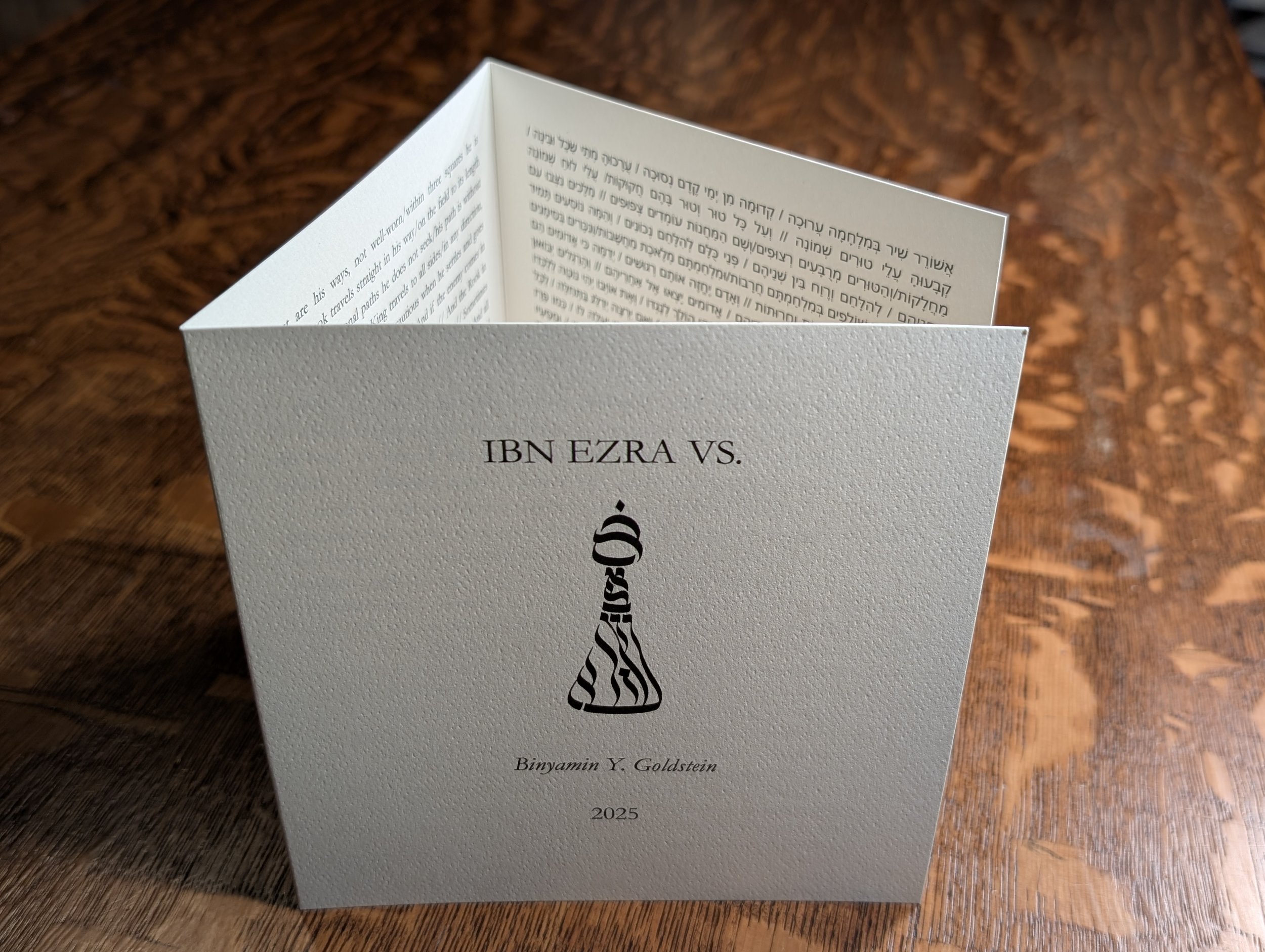 Image 3 of 6
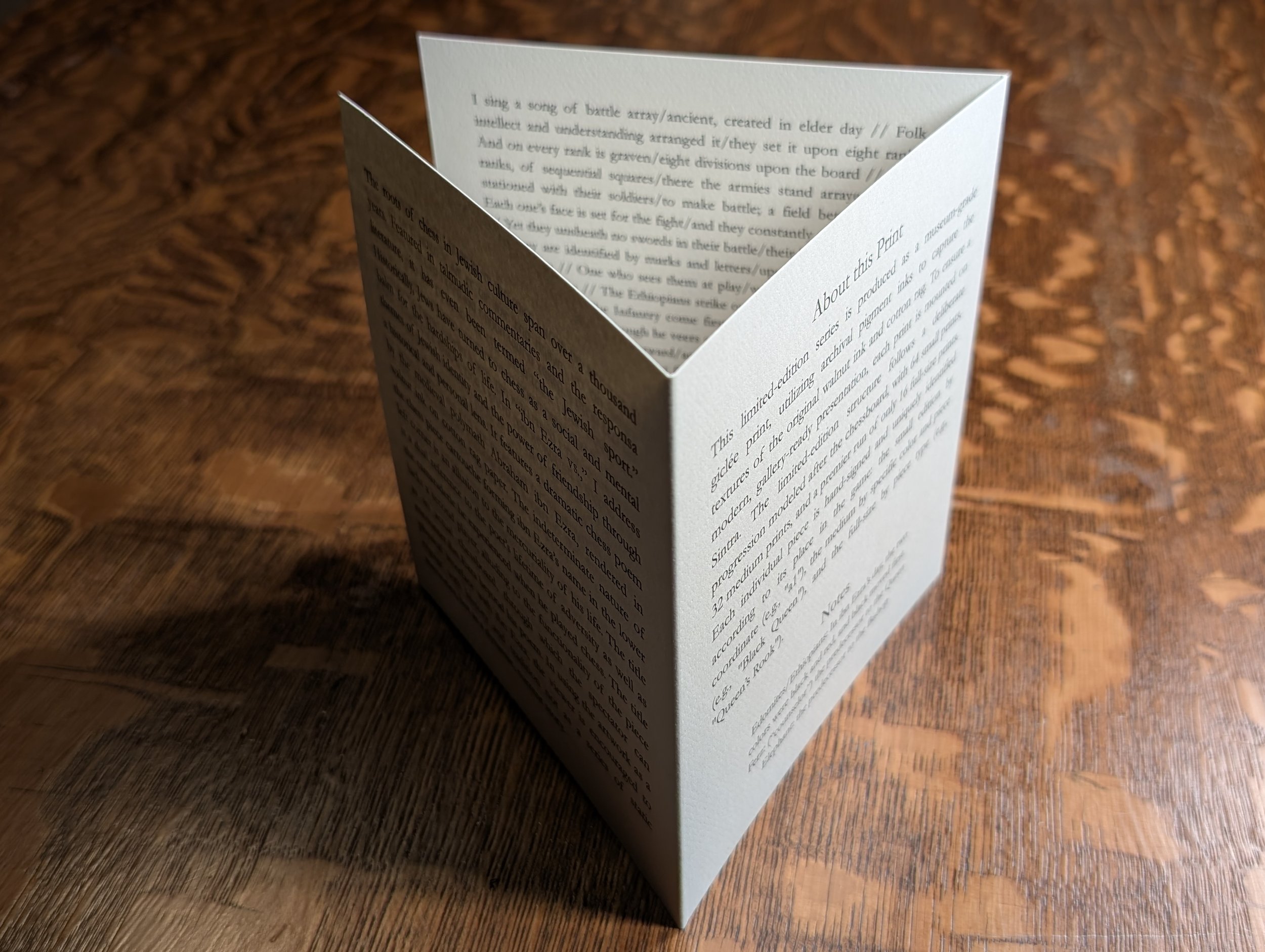 Image 4 of 6
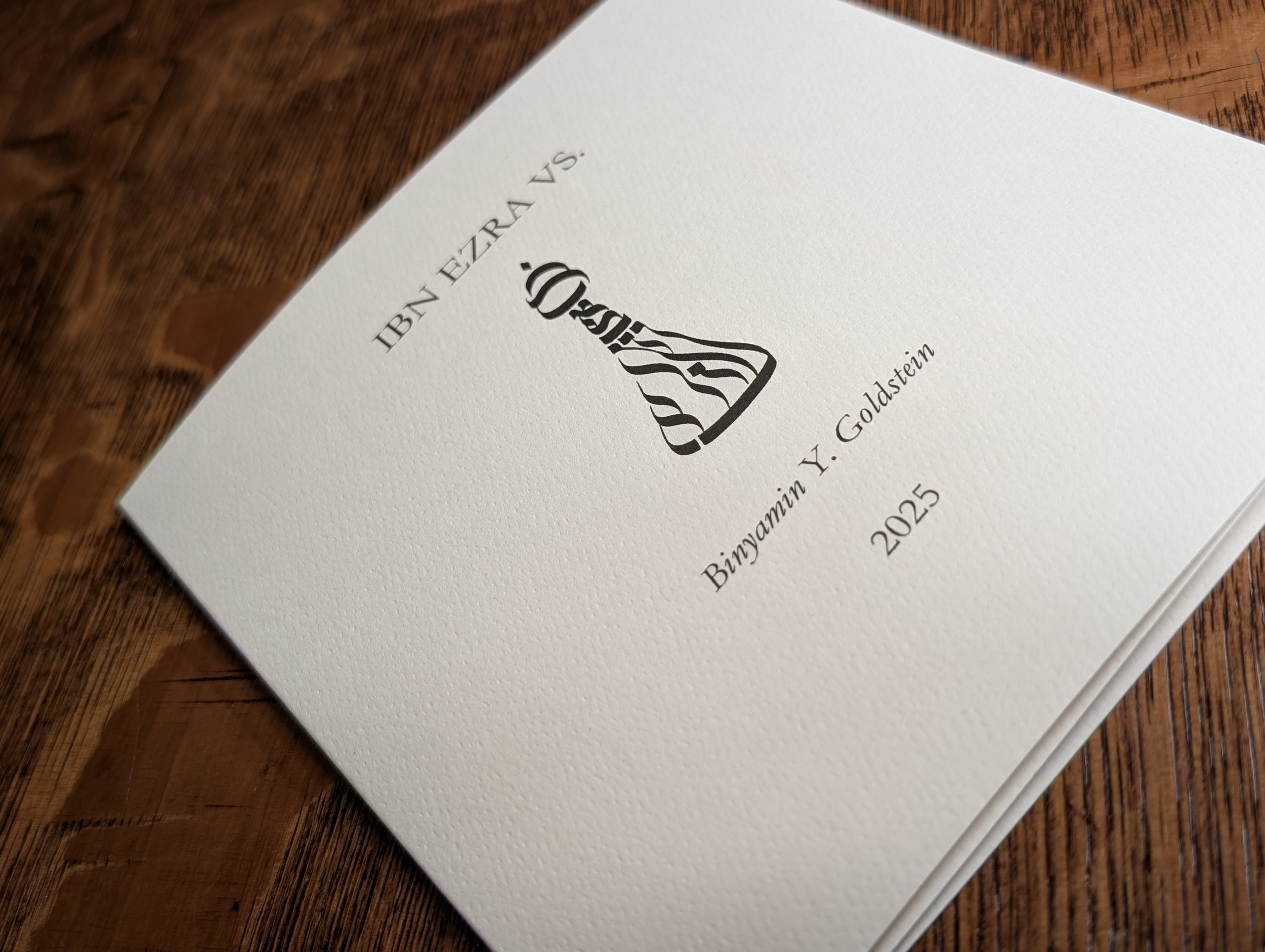 Image 5 of 6
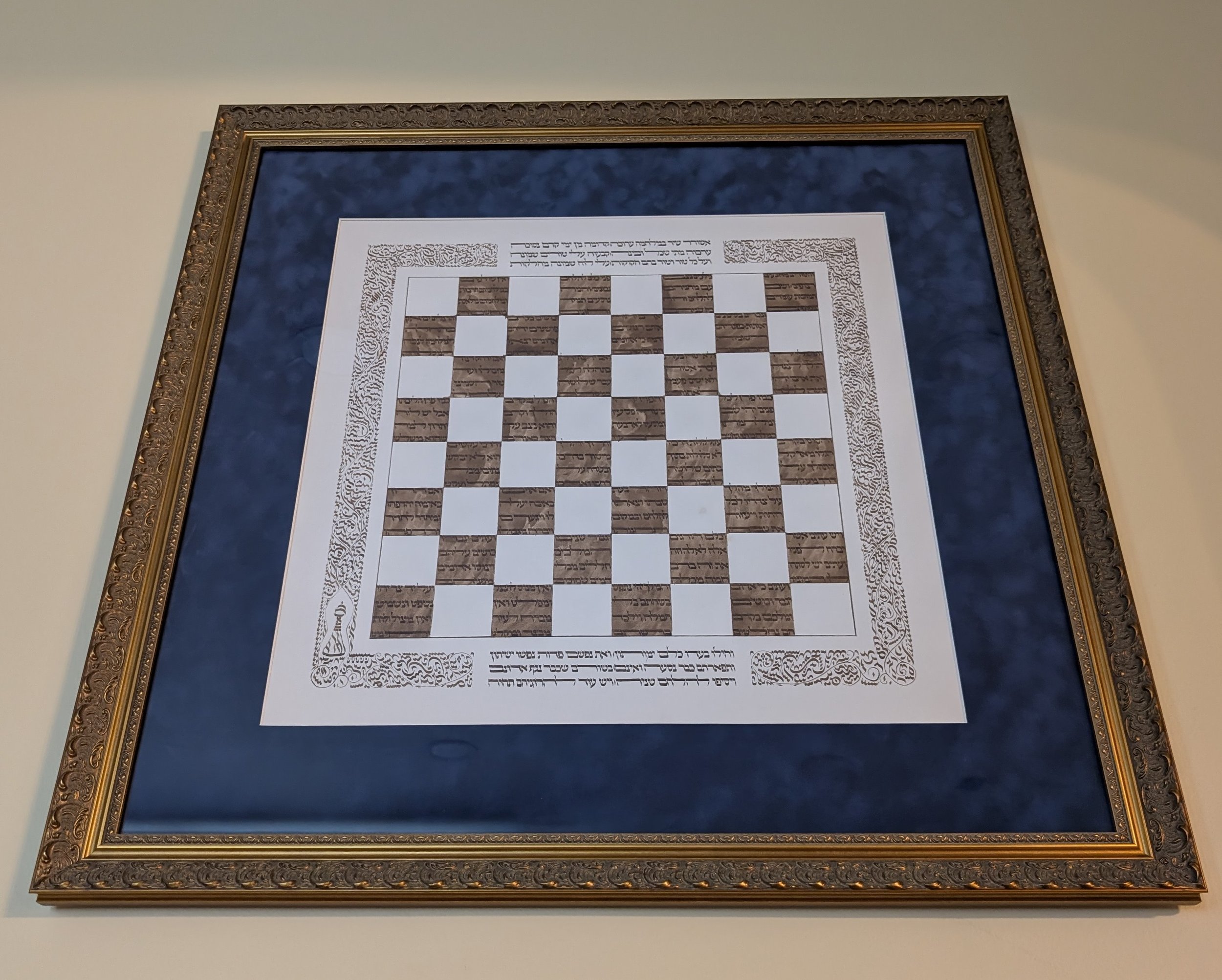 Image 6 of 6
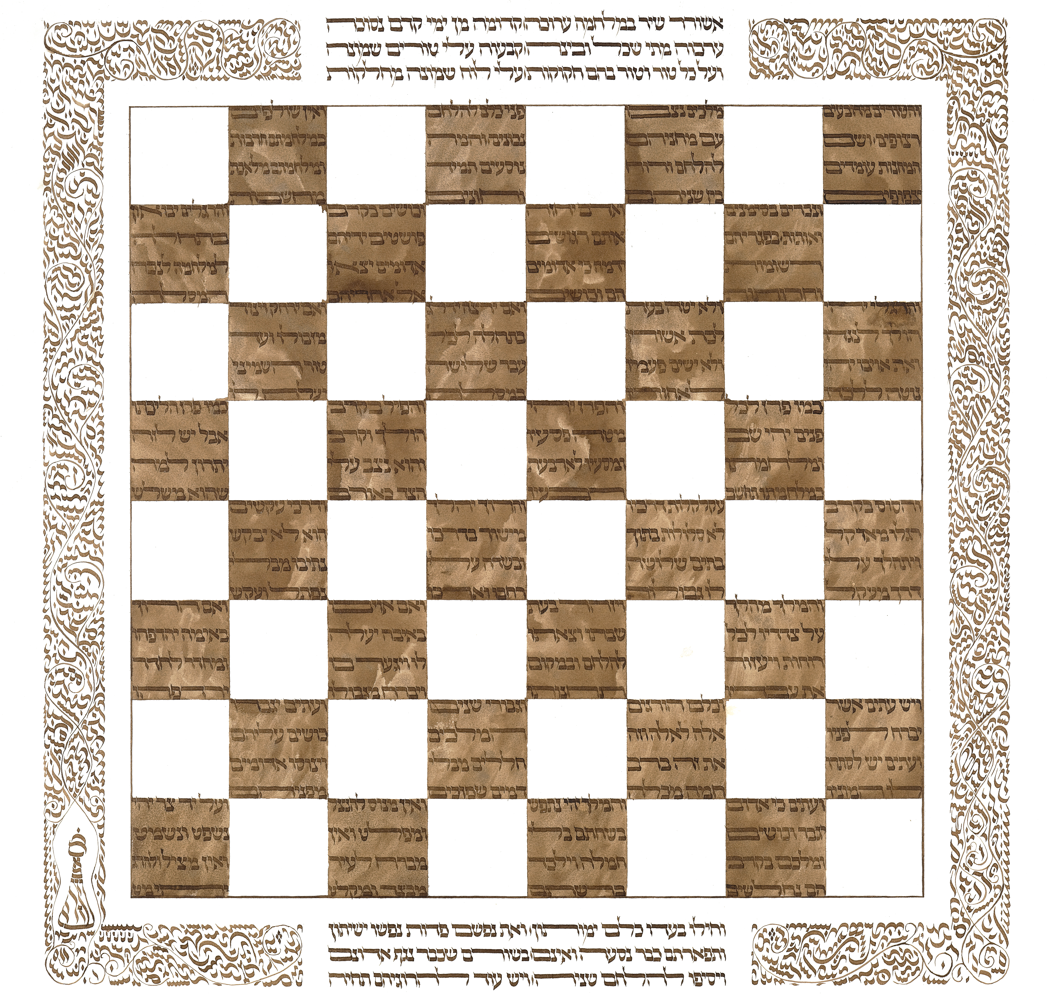
The roots of chess in Jewish culture span over a thousand years. Featured in talmudic commentaries and the responsa literature, it has even been termed “the Jewish sport.” Historically, Jews have turned to chess as a social and mental balm for the hardships of life. In “ibn Ezra vs.,” I address themes of Jewish identity and the power of friendship through a historical and personal lens. It features a dramatic chess poem by the medieval polymath Abraham ibn Ezra, rendered in walnut ink on cotton rag paper. The indeterminate nature of the chess piece cartouche forming ibn Ezra’s name in the lower left corner is an allusion to the mercuriality of his life. The title is a dual reference to the poet’s lifetime of adversity as well as the camaraderie he experienced when he played chess. The title lacks a second player, alluding to the functionality of the piece as an actual chessboard, through which the spectator can encounter ibn Ezra beyond his poem. In using the artwork as a physical interface with ibn Ezra, the viewer is encouraged to engage with history and tradition not as a series of static memories, but as a dynamic, current story.